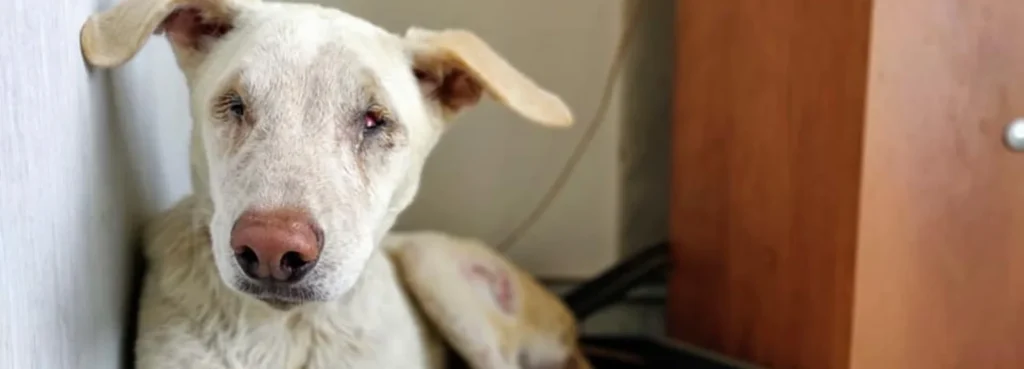

Blind dogs can live meaningful, emotionally rich, deeply connected lives. But only when they are safe. A blind dog needs a predictable environment. It needs food and water in familiar places. It needs caregivers who understand movement, fear, disorientation, pain, and anxiety. It needs protection from other dogs, sharp edges, sudden obstacles, traffic, and humans who may harm it again.
At VOSD, blind dogs are not treated as helpless. They are treated as dogs who need a different system of care.
They need:
Blindness in dogs is not always an accident of age. Many blind dogs who come into rescue have lived through extreme cruelty or long-neglected disease.
Some are blinded by violence
Dogs may be attacked with sharp objects, acid, boiling water, blunt force, or deliberately inflicted injuries. These cases are not just medical. They are the result of cruelty that leaves a dog permanently vulnerable.
Some are blinded by disease
Glaucoma, cataracts, corneal ulcers, untreated infections, retinal disease, diabetes-related complications, trauma, and age-related degeneration can all lead to partial or complete vision loss.
Some are blinded by neglect
A treatable condition becomes irreversible because nobody notices, nobody treats, or nobody considers the dog worth treating. At VOSD, the question is not whether the blindness was caused by cruelty, disease, age, or neglect.
The question is: what does this dog need now, and for the rest of its life?
A blind dog on the street is at continuous risk. The world is built for dogs who can see danger coming. A blind dog cannot. It may walk into traffic. It may be attacked before it knows another dog is near. It may fall into drains, collide with objects, be unable to find food, or become permanently anxious because every sound feels like a threat.
Many blind dogs can adapt beautifully in a controlled environment. But that environment must be built around them. At VOSD, blind dogs receive what they cannot get on the street: safety, familiarity, consistency, care, and medical support. For many of them, this is not temporary rehabilitation. It is life.
VOSD is India’s largest and most advanced canine welfare institution, operating across rescue, veterinary medicine, public health, technology, and lifetime canine care.
For blind dogs, VOSD provides a complete lifetime system.
1. Protected Sanctuary Living
Blind dogs live in safe, known environments where they can learn their surroundings, move without fear, and build trust through routine.
They need spaces that are stable, predictable, and protected.
2. VOSD Referral Hospital Support
The VOSD Referral Hospital at the Sanctuary supports the medical needs of blind dogs, including eye-related disease, pain, trauma, infection, old-age complications, and other chronic conditions. Blindness often comes with other medical problems. VOSD treats the whole dog, not just the eye.
3. Caregiver-Led Daily Management
A blind dog depends on the human being who approaches it, feeds it, cleans its space, moves it, treats it, and protects it from distress. Caregivers must understand that a blind dog can be easily startled. It may need voice cues, gentle touch, repeated routines, and patient handling. Supporting blind dogs means supporting caregiver manpower.
4. Safe Kennels and Enclosures
Blind dogs need spaces that reduce risk. That means safe surfaces, controlled layouts, familiar access to food and water, protection from sudden conflict, and careful grouping with compatible dogs. A badly designed space can injure a blind dog. A well-designed space gives them confidence.
5. Lifetime Medical Monitoring
Blind dogs may require long-term medicines, pain management, eye care, diagnostics, wound treatment, age-related care, and emergency intervention. At VOSD, the care does not stop when the dog survives. It continues for life.
Blind dogs at VOSD represent a powerful CSR opportunity because the impact is long-term, visible, measurable, and deeply humane.
Corporations can support:
Speak to VOSD About CSR Support
Most animal welfare systems are designed around rescue, treatment, and release.
This is why supporting blind dogs at VOSD is not just about supporting individual dogs. It supports a life care system that very few places can provide.
info@vosd.in

No donors yet.

VOSD is in the world’s largest ecosystem of no-kill rescue, rehabilitation, and lifelong care for dogs, and the services that support it. We bring 300-400 dogs a year – that are certain to die without VOSD’s intervention – by road, train & air from over 40 Indian cities.
If you are equally passionate about the welfare of strays and abandoned pet dogs, do your bit to help safeguard your companions by supporting our charity for dogs in India through donations or by volunteering. When you donate to a dog’s welfare at VOSD, you can be assured that the highest standards of hygiene, safety, and welfare are adhered to as we scale up our operations.
Of your donation goes directly towards dogs' needs. Zero overhead costs or admin fees on donations.

We help rehabilitate strays who are incapable of fending for themselves due to abuse or their health conditions and play an integral part in a stray dog’s life.
VOSD is located near Bangalore, India, and hundreds of rescued dogs reside here lifelong without ever worrying about food, shelter, and care. Our entire workforce is passionate about helping these dogs live a life of dignity, and your donations for dogs help us continue on our mission.
Every moment counts for a dog waiting on the streets. Your donation reaches the ones who need it the most. Together, we’re transforming lives with second chances and unconditional love.
Every rescued dog is a story of transformation. See how your donations change lives.

Before-and-after images of a rescued dog Veer transforming from malnourished to healthy and happy.

Before-and-after images of a rescued dog Nawab recovering from injury to a healthy, happy state.

Before-and-after photos of Mohan transforming from sick and weak to healthy and alert.

Before and After image of a dog Mojo behind a fence and later sitting outdoors, happy and relaxed.
VOSD provides veterinary support through the VOSD Referral Hospital at the Sanctuary. Treatment depends on the dog’s condition and may include pain management, infection control, chronic disease care, diagnostics, and other medical interventions.
Blindness may result from human cruelty, trauma, acid or burn injuries, sharp object injuries, glaucoma, cataracts, corneal disease, infection, diabetes-related complications, retinal disease, or old age.
Yes. Blind dogs can adapt well when they are safe, loved, and cared for in a stable environment. They need predictable spaces, patient handling, and protection from avoidable risk.
Many blind dogs at VOSD require specialized lifetime care and may not be suitable for ordinary adoption. VOSD evaluates each dog based on condition, safety, temperament, and long-term welfare.
Yes. Donors can support eye care, medicines, diagnostics, infection treatment, pain management, and other medical needs.
Yes. Corporations can support safe kennels, medical care, caregiver manpower, bedding, infrastructure, employee giving, payroll giving, or named sponsorship programs.
Campaign-specific donations should be directed toward blind dog care, medical treatment, facilities, and support systems, subject to VOSD’s operational discretion and the urgent needs of dogs under care.